Your Core Is Trying to Tell You Something: The Postpartum Condition That Gets Ignored Way Too Often
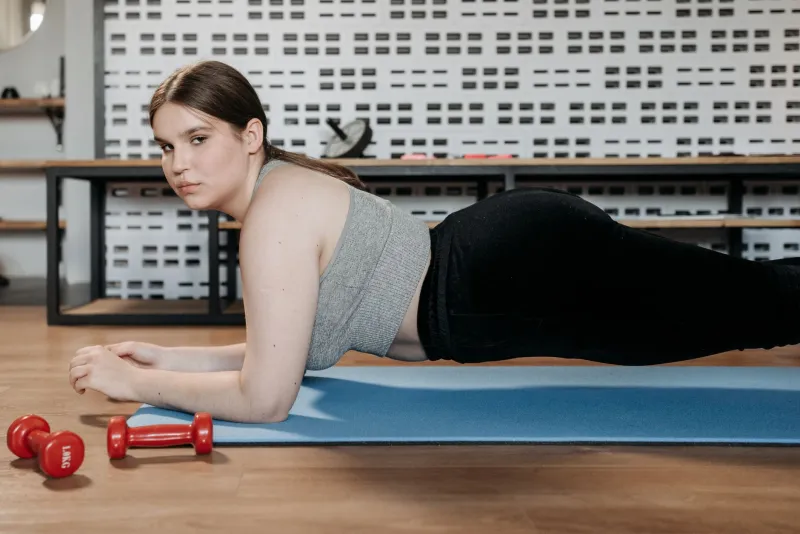
Somewhere around four months postpartum, Marisol from Austin, Texas, noticed something strange. When she sat up from bed, a ridge — almost like a fin — would poke up along the center of her abdomen. Her belly still looked rounded, even though she'd lost most of her pregnancy weight. Her lower back ached constantly. She mentioned it at her six-week checkup and was told everything looked "normal."
It wasn't until a friend sent her a YouTube video that she finally had a name for what she was experiencing: diastasis recti.
"I felt equal parts relieved and furious," she says. "Relieved because I wasn't imagining it. Furious because why didn't anyone tell me this was a thing?"
She's far from alone.
So What Exactly Is Diastasis Recti?
Diastasis recti (often shortened to DR) is the separation of the two parallel bands of rectus abdominis muscle — the ones that run down the center of your belly — along the connective tissue called the linea alba. During pregnancy, your uterus expands and pushes outward, stretching that midline tissue. For some people, it snaps back after delivery. For many, it doesn't.
Studies estimate that roughly 60% of people experience some degree of abdominal separation immediately postpartum, with about 39% still showing significant separation at six months. That's not a rare condition — that's practically the norm. Yet prenatal classes, hospital discharge packets, and even many OB appointments rarely address it.
The result? Millions of new parents are left trying to "bounce back" using fitness routines that can actually make things worse.
The Signs That Something Might Be Off
DR doesn't always announce itself dramatically. Some people feel it immediately; others don't connect the dots for months or even years. Here are the signals worth paying attention to:
- A visible ridge or "dome" along your midline when you do a crunch or sit up from lying down
- A soft, squishy gap you can feel with your fingers along the center of your belly
- Persistent lower back pain that doesn't respond to typical stretching
- A belly that still looks pregnant despite returning to pre-pregnancy weight
- Pelvic floor dysfunction, including leaking when you sneeze or laugh
- Poor posture and a feeling of core instability — like your trunk just doesn't feel trustworthy
To do a basic self-check: lie on your back with your knees bent. Place two fingers horizontally across your navel and slowly lift your head and shoulders as if starting a crunch. Feel for a gap between the muscle bands. A gap wider than two finger-widths, or one that feels very soft and unsupported, is worth discussing with a provider.
That said, width alone doesn't tell the whole story. Tension and depth of the gap matter too — which is why a pelvic floor physical therapist can give you a much clearer picture than a self-check alone.
Why Nobody Warned You About This
Here's the uncomfortable truth: diastasis recti sits in a weird gap between obstetrics and physical therapy. OBs are primarily focused on birth recovery, infection, and postpartum mood. Unless they've had specific training in pelvic floor health, DR often doesn't make it onto their radar. And because it's not life-threatening, it rarely gets flagged as urgent.
Add to that the cultural pressure on new moms to "get their bodies back" as quickly as possible, and you have a perfect storm. People are handed generic postpartum exercise guides — sometimes including crunches and planks, which can worsen separation — and sent on their way.
Pelvic floor physical therapist Dr. Keisha Owens, DPT, puts it plainly: "We've normalized postpartum discomfort to the point where people assume back pain, leaking, and a soft belly are just part of being a mom. They're not inevitable. They're often symptoms of an unaddressed injury."
What Actually Helps (And What to Skip)
The good news: diastasis recti is highly treatable, especially when caught early. The better news: you don't necessarily need a $300-a-session specialist to start making progress.
What to avoid in early recovery:
- Traditional crunches and sit-ups
- Heavy lifting with a held breath
- Intense core exercises like boat pose or double-leg lowers
- Any movement that causes that ridge or dome to appear
These exercises increase intra-abdominal pressure in ways that can push the separation wider rather than encouraging the tissue to heal.
Where to start instead:
Diaphragmatic breathing sounds almost too simple, but it's genuinely foundational. Learning to breathe fully into your belly — and exhale with a gentle core engagement — helps re-establish the pressure management system your core relies on. Think of it as rebooting the software before you try to run any programs.
Dead bugs and heel slides are low-load movements that begin teaching your deep core (specifically the transverse abdominis) to activate without straining the midline.
Posture and daily habits matter more than most people realize. How you get out of bed (rolling to your side first instead of doing a straight sit-up), how you pick up your baby, and how you carry groceries all affect how much load your midline is managing throughout the day.
When to seek professional help:
If your gap is three or more finger-widths, if you're experiencing significant pelvic floor symptoms, or if you've been doing gentle rehab for several weeks without any improvement, it's worth seeing a pelvic floor PT. Many offer sliding-scale fees, and some insurance plans cover it — it's absolutely worth calling to check. Telehealth pelvic floor services have also expanded significantly, making access easier if you're in a rural area or short on childcare coverage.
The Mental Side Nobody Mentions
For a lot of parents, diastasis recti isn't just a physical experience — it's an emotional one. Months of feeling like your body "didn't come back," of not understanding why you still look pregnant, of being told you just need to "work harder" at the gym... that takes a toll.
Marisol says the moment she understood what was actually happening — that her body had done something extraordinary and was simply waiting for the right kind of support — was the moment she stopped fighting herself.
"I stopped doing crunches, started doing breathing exercises, and within a few months I could feel my core working again for the first time," she says. "Not a six-pack. Just... function. That felt like everything."
A Note on Timelines
Recovery from diastasis recti isn't linear, and it's not fast. Some people see meaningful improvement in three to four months of consistent, appropriate rehab. Others work at it for a year or more. Both are valid. The goal isn't a flat stomach — it's a functional core that supports you through the lifting, carrying, and general chaos of early parenthood.
You grew a human. Your body shifted in profound ways to make that happen. The path back isn't about undoing what pregnancy did — it's about learning how to work with the body you have now.
And that starts with knowing what you're actually dealing with.
If you suspect you may have diastasis recti, consider reaching out to a pelvic floor physical therapist for a proper assessment. The American Physical Therapy Association's Find a PT tool (move.pt) can help you locate a specialist in your area.