The Body Part Nobody Talks About Postpartum (But Absolutely Should)
Somewhere between the newborn haze and the six-week checkup, a lot of new parents get the same basic clearance: incision looks good, bleeding has slowed, you're healing fine. See you in a year.
And then they go home and sneeze and leak through their underwear. Or they try to return to a workout and feel like something is falling out. Or sex, when they finally try it, hurts in ways they didn't expect and can't quite explain.
They Google it. They find forums full of other people whispering the same questions. And almost universally, they conclude some version of the same thing: I guess this is just what happens now.
It isn't. Or rather — it doesn't have to be.
What Your Pelvic Floor Actually Did During Birth
The pelvic floor is a hammock-like group of muscles, ligaments, and connective tissues that spans the base of your pelvis. It holds up your bladder, uterus, and rectum. It controls when you pee and when you don't. It plays a role in sexual function, core stability, and even the way you breathe.
During a vaginal birth, those muscles stretch — dramatically. We're talking up to three times their resting length, which is something no other skeletal muscle in the human body is asked to do. The nerves that thread through that region get compressed and sometimes temporarily damaged. Tearing, whether spontaneous or from an episiotomy, creates scar tissue that can affect how those muscles move and communicate with your brain.
And here's the part that surprises a lot of people: a C-section doesn't exempt you from pelvic floor dysfunction. You still carried a baby for nine months. Your pelvic floor still bore the weight of a growing uterus. Hormones like relaxin still loosened your connective tissue throughout pregnancy. The birth route changes some of the specifics, but the pelvic floor was involved either way.
Why Dysfunction Can Show Up Months — Or Years — Later
One of the most disorienting things about pelvic floor issues is the delayed timeline. You might feel relatively okay at eight weeks postpartum and then notice symptoms creeping in at eight months. Or you might feel fine after your first baby and then experience significant dysfunction after your second or third.
This happens for a few reasons. Compensation is a big one — your body is incredibly good at recruiting other muscles to cover for ones that aren't functioning well. You might not notice the pelvic floor is struggling until that compensatory pattern breaks down, which often happens when you return to higher-impact activity or when fatigue accumulates.
Hormonal shifts play a role too, especially during breastfeeding, when estrogen levels drop and vaginal tissue can become thinner and less elastic. Many parents notice symptoms worsen during this period and then improve after weaning — but that's not a reason to just wait it out. Getting support earlier means less time dealing with symptoms that affect your daily life.
Scar tissue, whether from a perineal tear or a C-section incision, can also create downstream effects that don't show up immediately. Restrictions in one area of the body have a way of rippling outward.
What 'Pelvic Floor Dysfunction' Actually Looks Like
It's worth naming this clearly, because so many parents don't recognize their symptoms as something treatable. Pelvic floor dysfunction can look like:
- Leaking urine when you sneeze, cough, laugh, jump, or run (stress incontinence)
- Urgency — the sudden, overwhelming need to get to a bathroom immediately
- Pelvic heaviness or pressure, sometimes described as a feeling that something is falling out
- Pain during or after sex, including vaginal dryness or a sensation of tightness
- Lower back or hip pain that persists beyond typical postpartum recovery
- Difficulty fully emptying your bladder or bowels
- Pain at the site of a perineal tear or episiotomy scar, especially with sitting or prolonged activity
None of these are things you simply have to live with. And none of them mean something is catastrophically wrong. They mean your pelvic floor needs attention — the same way a shoulder needs physical therapy after a significant injury.
Why Kegels Alone Aren't the Answer
Kegels have become shorthand for "do something about your pelvic floor," but the reality is more nuanced. A Kegel is a contraction of the pelvic floor muscles, and it's genuinely useful — for some people, in some situations.
But a significant number of people with pelvic floor dysfunction actually have a pelvic floor that's too tight, not too weak. Hypertonic pelvic floor muscles are tense and guarded, often as a protective response to the trauma of birth or to chronic stress. For those people, doing more Kegels is like trying to fix a muscle cramp by flexing harder. It doesn't help, and it can make things worse.
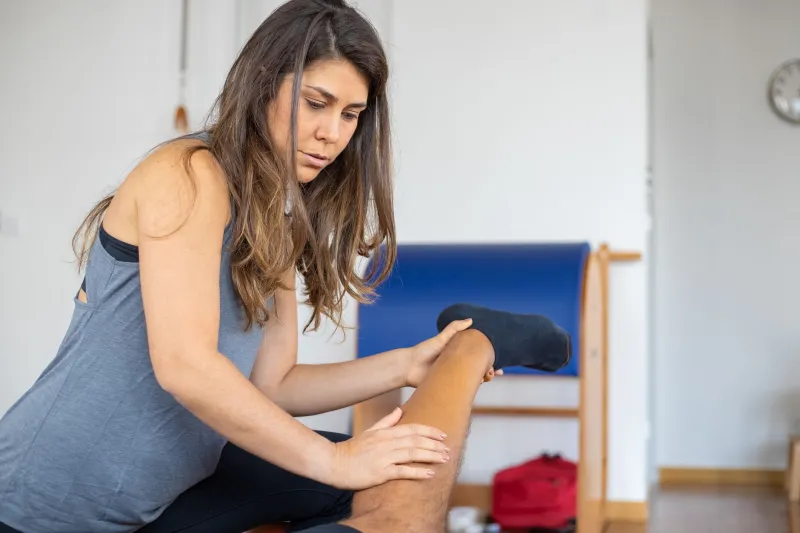
This is exactly why a pelvic floor physical therapist is so valuable. They can actually assess what's happening — whether your muscles are underactive, overactive, or some combination of both — and build a treatment plan that addresses your specific situation. That might include manual therapy, breathing and coordination work, specific exercises, and guidance on returning to activity safely.
Finding a Pelvic Floor PT (And What to Expect)
Pelvic floor physical therapy is a specialized area of practice, and therapists who focus on it have advanced training in the anatomy and function of the pelvic region. In the US, you can search for a provider through organizations like the American Physical Therapy Association's PT Locator or the APTA's Academy of Pelvic Health Physical Therapy directory. Many OB-GYNs and midwives can also provide referrals.
A first appointment typically involves a detailed intake conversation about your birth history, symptoms, and goals. The assessment may include an internal exam, though this is always explained in advance and done with your full consent. It can feel vulnerable, but most people describe their pelvic floor PT as one of the most validating healthcare experiences they've had postpartum — someone finally paying real attention to what their body went through.
Insurance coverage varies, but many plans do cover pelvic floor PT when it's referred by a physician. It's worth calling your insurance provider to ask about your specific benefits before your first appointment.
You Don't Have to Earn This Care
There's a particular kind of postpartum stoicism that gets handed down quietly — the idea that discomfort after having a baby is just the price of admission, something to accept and move past. It's not a mean-spirited message, but it does a lot of harm.
Your pelvic floor did something extraordinary. The fact that its recovery isn't visible the way a surgical scar is doesn't make it less real or less deserving of care. Leaking, pressure, pain, and dysfunction are not character flaws. They're not signs that you're weak or that you didn't do something right. They're physiological responses to a physiological event — and they respond to treatment.
You don't have to wait until things feel unbearable. You don't have to earn the right to ask for help by suffering long enough. The referral, the appointment, the recovery plan — those are yours to ask for from the beginning.
Start the conversation at your next provider visit, or reach out directly to a pelvic floor PT in your area. Your body carried and delivered a whole human. The least it deserves is a real recovery.