Handfuls in the Shower: The Postpartum Hair Loss Nobody Warned You About
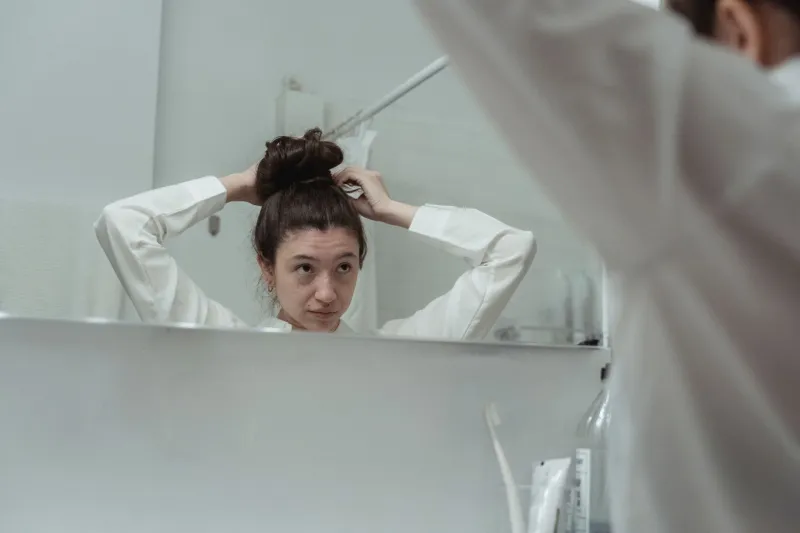
You're standing in the shower somewhere around month three or four postpartum. The baby is (miraculously) napping. You've finally carved out ten minutes for yourself. And then you look down at the drain and your heart sinks — because there is so much hair coming out that you're genuinely wondering how any of it is still attached to your head.
Welcome to postpartum telogen effluvium. It's a mouthful of a term for something that affects the vast majority of new parents with a uterus, and yet somehow it barely gets a mention in the stack of pamphlets they send you home from the hospital with.
Let's fix that.
So What Is Actually Happening Up There?
To understand postpartum hair loss, you have to back up to pregnancy itself. During those nine months, your body is flooded with estrogen — and one of estrogen's lesser-known side effects is that it essentially puts your hair follicles into a prolonged growth phase. Normally, hair cycles through growth, transition, and rest phases continuously, with roughly 10 to 15 percent of your strands in the resting (telogen) phase at any given time. But during pregnancy, elevated estrogen keeps more follicles in active growth, which is why so many people notice their hair looking thicker and more lustrous when they're expecting.
Then you give birth. Hormone levels — particularly estrogen and progesterone — drop sharply and rapidly. Your follicles get the memo and collectively decide it's time to catch up on all that resting they skipped. A much larger percentage of your hair shifts into the telogen phase simultaneously, and when those resting hairs eventually shed, they all go at roughly the same time. That's why it feels so dramatic. You're not losing more hair than normal in terms of the hair's lifespan — you're just losing it all at once instead of gradually throughout the year.
This is called telogen effluvium, and while it sounds alarming, it is a normal physiological response to a massive hormonal shift. It is not a sign that something is wrong with you.
When Does It Start, and When Does It Stop?
Most people start noticing significant shedding between two and four months postpartum, though some don't see it kick in until closer to six months. The peak of shedding typically happens around the three-to-four-month mark, which — not coincidentally — also coincides with sleep deprivation, the end of any newborn-phase adrenaline, and the general emotional chaos of adjusting to parenthood. Great timing, right?
The good news: for most people, postpartum hair loss resolves on its own by the time baby hits their first birthday. Many notice shedding slowing significantly by months six to nine. Your hair follicles haven't been damaged — they just need time to cycle back into their normal rhythm. The hair will come back.
If you're still experiencing heavy shedding well past the twelve-month mark, or if you're noticing patchy loss rather than overall thinning, it's worth looping in your OB or a dermatologist. Thyroid dysfunction, iron deficiency anemia, and other postpartum conditions can mimic or worsen hair shedding, and those are worth ruling out.
The Anxiety Part Nobody Talks About
Here's what the clinical explanations don't fully capture: watching your hair fall out — especially in the quantities that postpartum shedding can produce — is genuinely distressing. It can feel like losing a part of your pre-baby identity at a time when so much else about yourself already feels unfamiliar. That emotional weight is real and valid, and it doesn't make you vain or shallow for caring about it.
If the hair loss is significantly affecting your mood or self-image, say something to your provider. It deserves to be part of the postpartum mental health conversation, not dismissed as purely cosmetic.
What Actually Helps (Evidence-Based, No Snake Oil)
Let's be real: there's a lot of wellness industry noise around postpartum hair loss, and not all of it is grounded in science. Here's what the evidence actually supports:
Get your labs checked. Before spending money on anything else, ask your doctor to check your ferritin (stored iron) levels and thyroid function. Iron deficiency is extremely common postpartum — especially after significant blood loss during delivery — and low ferritin is independently associated with hair shedding. If your levels are low, supplementing iron under medical guidance can make a meaningful difference.
Keep up with your prenatal vitamin. Many providers recommend continuing your prenatal vitamin throughout the postpartum period, particularly if you're breastfeeding. The nutrients in it — including biotin, zinc, and folate — support overall hair health, even if they won't stop the shedding cycle in its tracks.
Be gentle with your hair. This isn't a cure, but it is damage control. Tight hairstyles, excessive heat, and aggressive brushing can worsen breakage on top of the natural shedding. A wide-tooth comb, lower heat settings, and looser styles can help you retain more of what you've got while you wait it out.
Reconsider your shampoo and conditioner. Volumizing formulas and lightweight conditioners can make thinning hair feel fuller and more manageable. Look for products with ingredients like biotin or keratin if you want an extra boost, though manage your expectations — no shampoo is going to stop the underlying hormonal process.
Talk to a dermatologist about minoxidil. If you're not breastfeeding and your shedding is severe or prolonged, a board-certified dermatologist may discuss topical minoxidil (the active ingredient in Rogaine) as an option. It's worth an actual conversation with a professional rather than a self-diagnosis trip to the drugstore — especially given the postpartum context.
Cut it if you want to. This is purely psychological, but it works for a lot of people: getting a haircut can make thinning less visually obvious and give you a sense of agency over something that otherwise feels completely out of your control. If a new cut makes you feel like yourself again, that matters.
A Note on Biotin Supplements
Biotin is everywhere in the hair-loss supplement space, and while it's not harmful at typical doses, it's important to know that biotin deficiency is actually quite rare — and if you're already taking a prenatal vitamin, you're likely already getting plenty. Mega-doses of biotin can also interfere with certain lab test results, which is worth mentioning to your doctor. The supplement industry has built a lot of revenue on the biotin-hair connection, but the evidence for it helping people who aren't actually deficient is pretty thin.
You're Going to Be Okay
Postpartum hair loss is one of those experiences that feels uniquely isolating because nobody really prepares you for it — and then the moment you mention it to another parent who's been through it, you realize it's practically universal. Your body is not broken. Your hair is not gone forever. This is a temporary chapter in the much longer story of your postpartum recovery.
In the meantime, be kind to yourself. You grew an entire human. A little extra hair in the shower drain is a small price to pay — even if it doesn't feel that way at 3 a.m. when you're pulling another clump off your pillow.